

The Case for Reintroducing Animal-Derived Ingredients into Modern Cosmetics.
“After thousands of years in which humans used materials of animal, plant and mineral origin side by side, the next stage of sustainable cosmetics may similarly depend not on excluding an entire class of biological materials, but on using all available resources more intelligently, responsibly and completely.”
From Prehistoric Resource Use to Modern Cosmetics
For most of human evolutionary history, humans lived as hunter-gatherers and obtained substantial quantities of food and materials from animals. Reconstructing the precise composition of prehistoric diets remains difficult and varies considerably according to geography, climate and ecology. Nevertheless, ethnographic and evolutionary studies suggest that animal foods commonly represented a substantial proportion of hunter-gatherer energy intake, with estimates frequently falling between approximately 30% and 70%, and some populations relying much more heavily on animal resources [1-3].
Animal procurement also generated materials beyond food. Hides, bones, tendons, fats, marrow and other tissues represented valuable resources within societies in which material efficiency was essential. Direct archaeological evidence identifying prehistoric skincare formulations is necessarily limited because fats and other organic substances rarely survive over archaeological timescales. There is, however, evidence for the prehistoric use of ochre on the human body, and experimental research has investigated mixtures of ochre and animal fat as plausible protective preparations [4]. Such evidence does not establish animal fat as a universal prehistoric cosmetic, but it supports the broader proposition that animal-derived substances were available and technically suitable components of early skin-protective preparations.
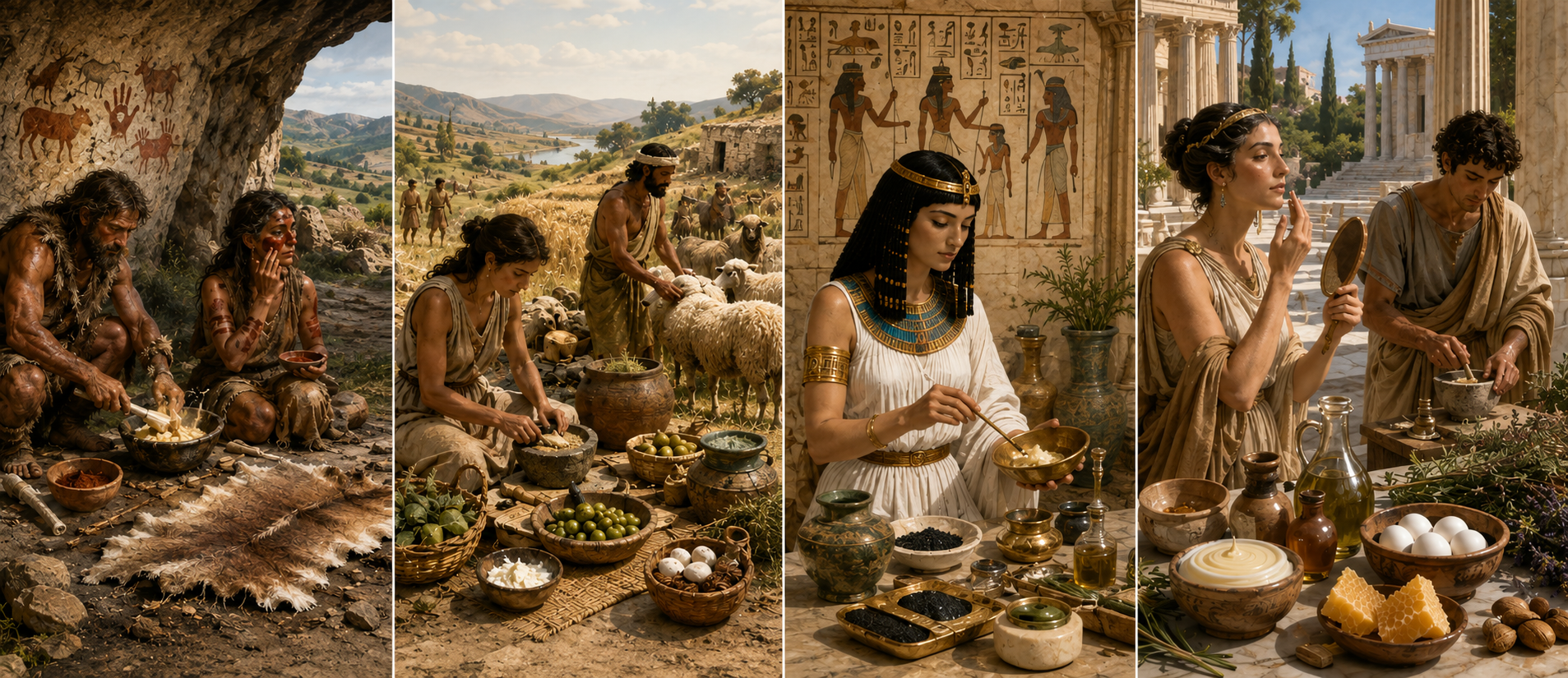
With the development of agriculture and animal domestication from approximately 12,000 years ago, access to animal and plant raw materials became increasingly organised. Archaeological, historical and chemical evidence demonstrates that ancient cosmetic preparations incorporated materials from all three major natural sources: plants, minerals and animals [5]. Ancient Egyptian cosmetic formulations, for example, included plant oils and resins alongside beeswax and animal fats; chemical analyses of surviving Egyptian kohl preparations have identified animal fats consistent with historical descriptions of animal-derived ointments [5,6]. Evidence from later Greek and Roman cultures similarly records the use of animal fats, eggs, milk, beeswax and wool-derived materials alongside olive oil, almond oil, botanical extracts, minerals and pigments.
The important historical observation is therefore not that cosmetics were predominantly animal-derived, but that animal, plant and mineral ingredients existed alongside one another for millennia. Traditional cosmetic systems made use of locally available biological resources rather than separating ingredients into the contemporary categories of “plant-based” and “animal-derived” [5].
Animal-derived lipids and proteins remained useful materials long after antiquity. Tallow became widely used in soap and ointment manufacture, while beeswax, lanolin and other animal-derived materials developed established applications in pharmaceutical and cosmetic formulations. Plants likewise supplied olive, sesame, almond, castor and numerous other oils. For centuries, cosmetic formulation therefore depended on a diverse biological material base rather than a single feedstock class [5,7].
The Twentieth-Century Transition
The twentieth century fundamentally changed the raw-material landscape of both agriculture and cosmetics. Industrial chemistry provided increasingly standardised synthetic ingredients and petroleum-derived materials, while the agricultural transformation associated with the Green Revolution greatly expanded the use of high-yield crop varieties, irrigation, synthetic fertilisers, pesticides and mechanisation [8,9].
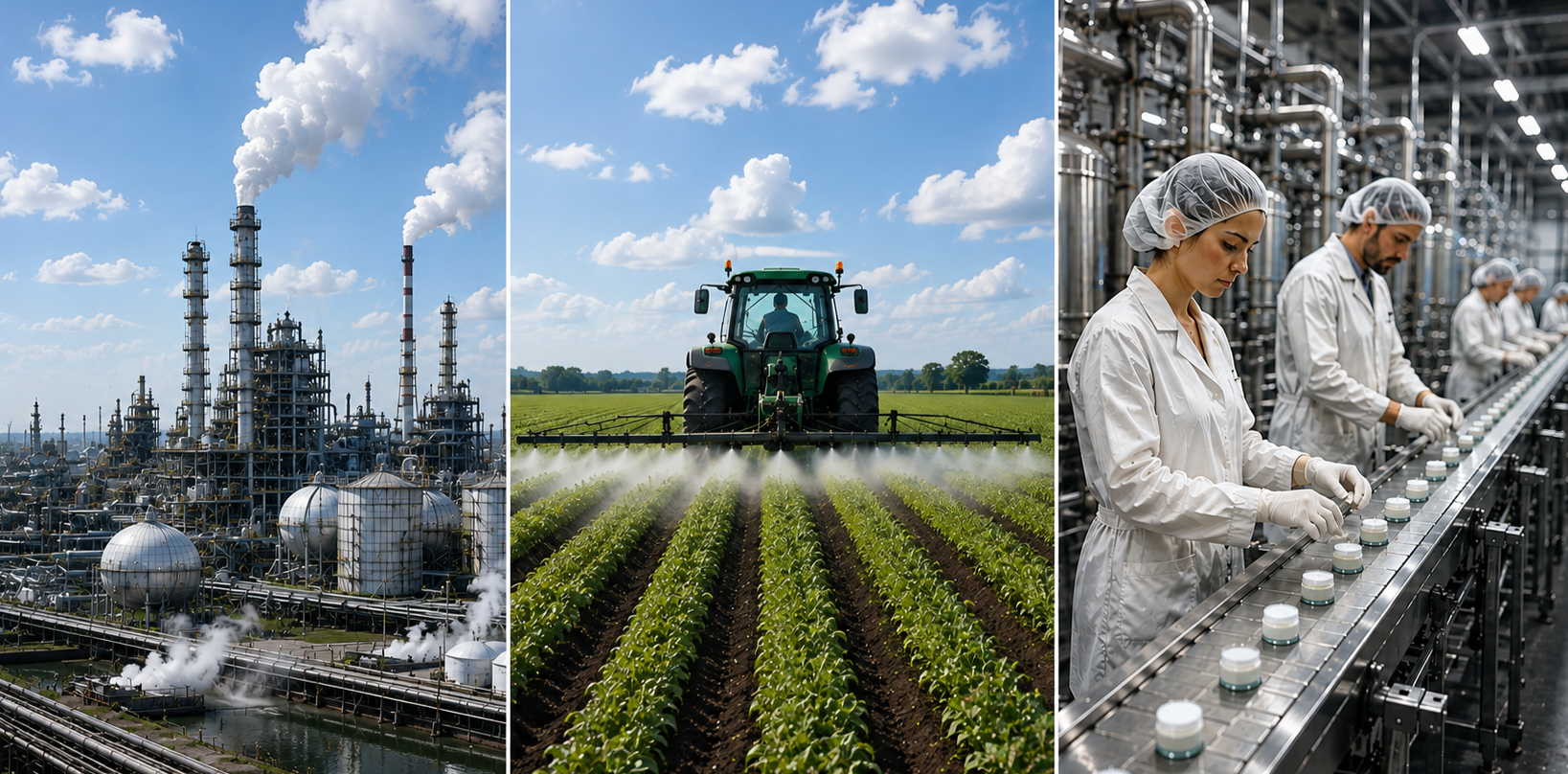
These developments produced enormous gains in agricultural productivity and food availability. However, they also changed the availability and economics of biological feedstocks. Industrial cultivation enabled large quantities of vegetable oils to enter global markets, while petrochemistry created highly consistent mineral oils, petrolatum, surfactants, polymers and other functional cosmetic ingredients. Reviews of cosmetic history describe the twentieth century as the period in which formulations expanded from ingredients derived predominantly from plants, minerals and animals towards an increasingly diverse palette incorporating synthetic chemistry [5].
This transition delivered important benefits in cost, stability, safety, scalability and formulation performance. It should therefore not be interpreted simply as the replacement of “natural” materials by inferior synthetic ones. Highly refined mineral oil and petrolatum, for example, remain well-characterised and effective dermatological materials [10].
The environmental consequences of the agricultural system that developed alongside this industrial transformation are nevertheless increasingly apparent. Research into the Green Revolution has documented unintended effects associated with intensive irrigation, fertiliser and pesticide use, soil degradation, chemical runoff and simplified agricultural landscapes [8,9].
This creates an important distinction for contemporary cosmetic sustainability. The relevant question is no longer simply whether an ingredient is animal-derived, plant-derived or synthetic, but how the material is produced, what resources its production requires and whether it originates as a primary product or as a secondary resource that would otherwise be discarded.
Why Restoring Material Diversity Matters
Agricultural intensification has become an important driver of biodiversity decline. Global insect declines cannot reliably be expressed as a number of individual insects killed, because monitoring data are geographically incomplete and insect populations are extraordinarily large. Nevertheless, substantial declines in insect abundance, biomass and diversity have been reported, and reviews identify agricultural intensification, habitat loss, pesticide exposure and climate change among the principal pressures [11-13].
These effects extend through food webs. A major 2023 analysis examined population trends for 170 common bird species monitored at more than 20,000 sites across 28 European countries over 37 years. It concluded that agricultural intensification - particularly high pesticide and fertiliser use - was the dominant pressure associated with declining bird populations, with particularly pronounced effects on species dependent on invertebrates [14]. The study reported an overall decline of approximately 25% in common European bird abundance between 1980 and 2016, with substantially greater losses among farmland birds [14].
Aquatic ecosystems illustrate another consequence of intensive nutrient use. Nitrogen and phosphorus transported from agricultural land into rivers, lakes and coastal waters stimulate excessive primary production and algal growth. Subsequent decomposition consumes dissolved oxygen and can create hypoxic environments incapable of supporting many forms of aquatic life. Diaz and Rosenberg documented more than 400 coastal hypoxic systems worldwide by 2008 and demonstrated that their prevalence had increased markedly since the 1960s [15]. Later assessments have placed the number of recognised coastal dead zones above 500 [16]. Eutrophication and associated hypoxia are linked to biodiversity loss, fish kills, seagrass decline and wider changes in aquatic ecosystem structure [15-17].

These environmental impacts do not mean that replacing plant-derived ingredients with animal-derived ingredients would automatically improve sustainability. Livestock production itself can impose substantial environmental impacts, and the sustainability of any ingredient depends on its source, processing requirements, allocation of environmental burdens and alternative uses.
A different argument can, however, be made for animal-derived co-products and by-products that already arise within established food-production systems.
Circular-bioeconomy research increasingly identifies food-processing residues as sources of proteins, lipids and other functional molecules that can be recovered instead of discarded [18-20]. Collagen, gelatin, keratin, fats, chitin and other animal-derived materials are examples of resources for which higher-value applications can be developed from existing processing streams [19]. Similar principles are already being adopted in cosmetics using plant-food residues such as fruit skins, seeds, coffee residues and other agricultural co-products [20].
From a circularity perspective, there is little reason for this principle to apply exclusively to plants. Where an animal-derived material is an unavoidable or underutilised co-product of an existing food chain, recovering it for cosmetics may increase the useful output obtained from resources already consumed in producing food. The appropriate sustainability comparison is therefore not simply animal versus plant, but recovered secondary resource versus purpose-grown or virgin raw material.
Towards a More Balanced Ingredient Economy
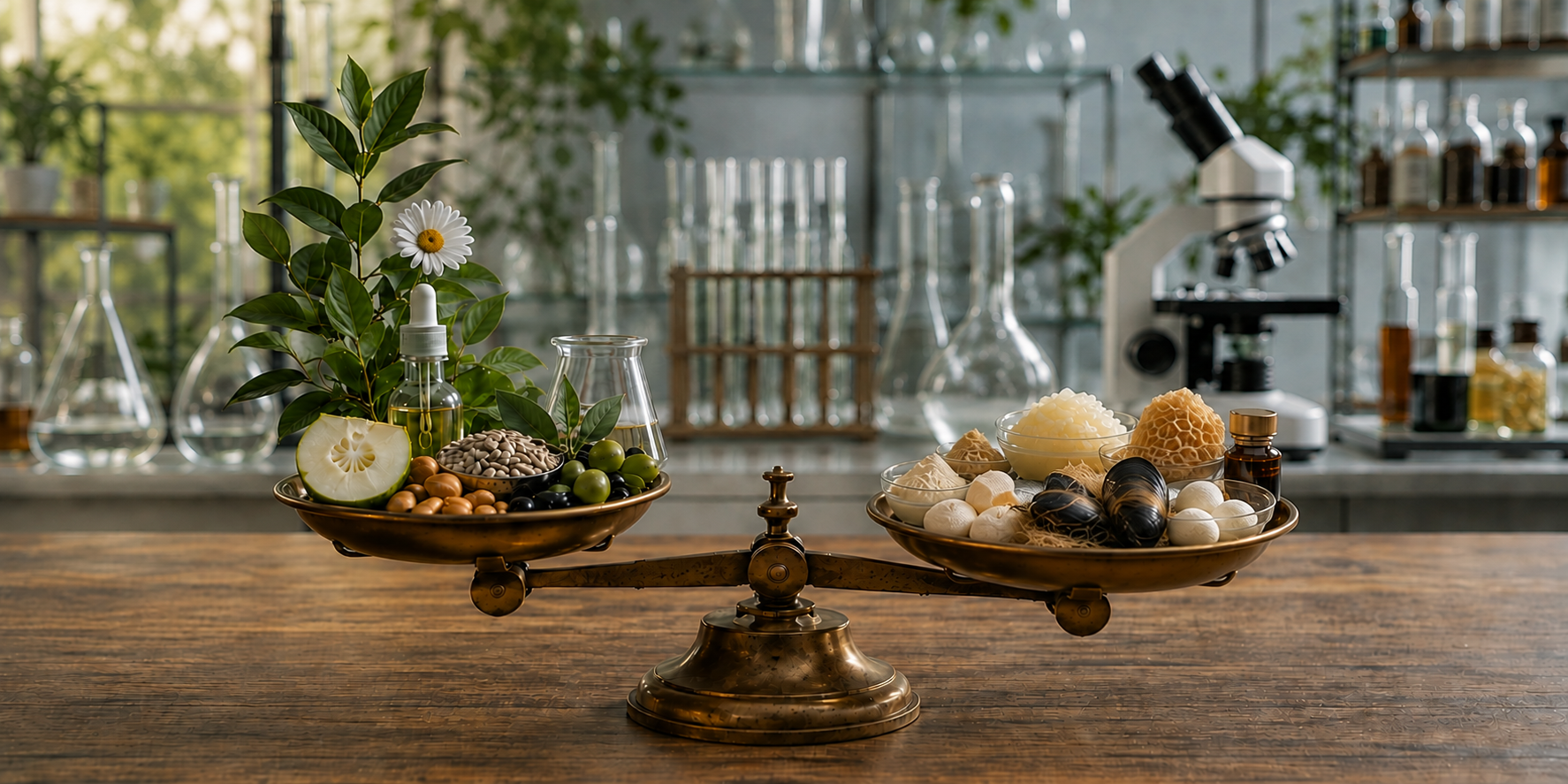
The contemporary cosmetics market has moved strongly towards vegan positioning. Market analyses consistently identify Europe as one of the world's largest markets for vegan cosmetics, and vegan product claims have become increasingly prominent across skincare and beauty [21]. Yet dietary surveys suggest that only a small minority of European consumers themselves follow vegan diets; estimates vary by country and methodology but commonly fall within the low single-digit percentages [22].
This creates an interesting distinction between consumer diet and cosmetic product positioning. A consumer does not necessarily need to be vegan to purchase vegan cosmetics, and ethical considerations surrounding animal welfare remain legitimate. Nevertheless, the growing association between “vegan” and “sustainable” risks oversimplifying a much more complex environmental question.
An ingredient produced from a purpose-grown agricultural crop is not inherently more circular than an animal-derived ingredient recovered from a food-processing waste stream. Equally, an animal-derived ingredient is not inherently sustainable merely because it is a by-product. Environmental performance has to be demonstrated through traceability, responsible sourcing, processing efficiency and, where possible, life-cycle assessment.
This creates an opportunity for a new category of cosmetic ingredients based not on a return to historical practices for their own sake, but on responsible biological resource utilisation.
The objective should not be to replace plant-derived cosmetics with animal-derived cosmetics. Rather, it should be to restore a broader raw-material strategy in which responsibly sourced plant ingredients, recovered animal co-products, biotechnology-derived materials, recycled feedstocks and safe synthetic ingredients are evaluated according to function and environmental performance rather than origin alone.
Such an approach is consistent with the emerging circular bioeconomy, which seeks to retain biological resources at their highest practical value and transform unavoidable residual streams into useful products [18]. Food-industry by-products are increasingly being investigated specifically as sources of cosmetic raw materials [20].
Market Opportunity
This transition may also create a commercial opportunity. The European vegan cosmetics sector is already substantial and continues to grow, demonstrating strong consumer and brand interest in ingredient provenance and ethical positioning [21]. At the same time, the overwhelming majority of consumers do not follow exclusively vegan diets [22]. Animal-derived ingredients therefore need not necessarily be incompatible with the values of the broader cosmetics market, provided that their provenance, animal-welfare implications, environmental performance and role within the food system are communicated transparently.
Meanwhile, climate and circular-economy policies are creating pressure to reduce dependence on virgin fossil feedstocks. European chemical-industry transition strategies explicitly envisage a progressive movement away from primary fossil carbon towards combinations of recycled materials, biomass, captured carbon and other alternative feedstocks [23]. Under ambitious global net-zero scenarios, petroleum demand would also decline substantially towards the middle of this century, although the rate and extent of that transition remain highly dependent on future policy and technological development [24].
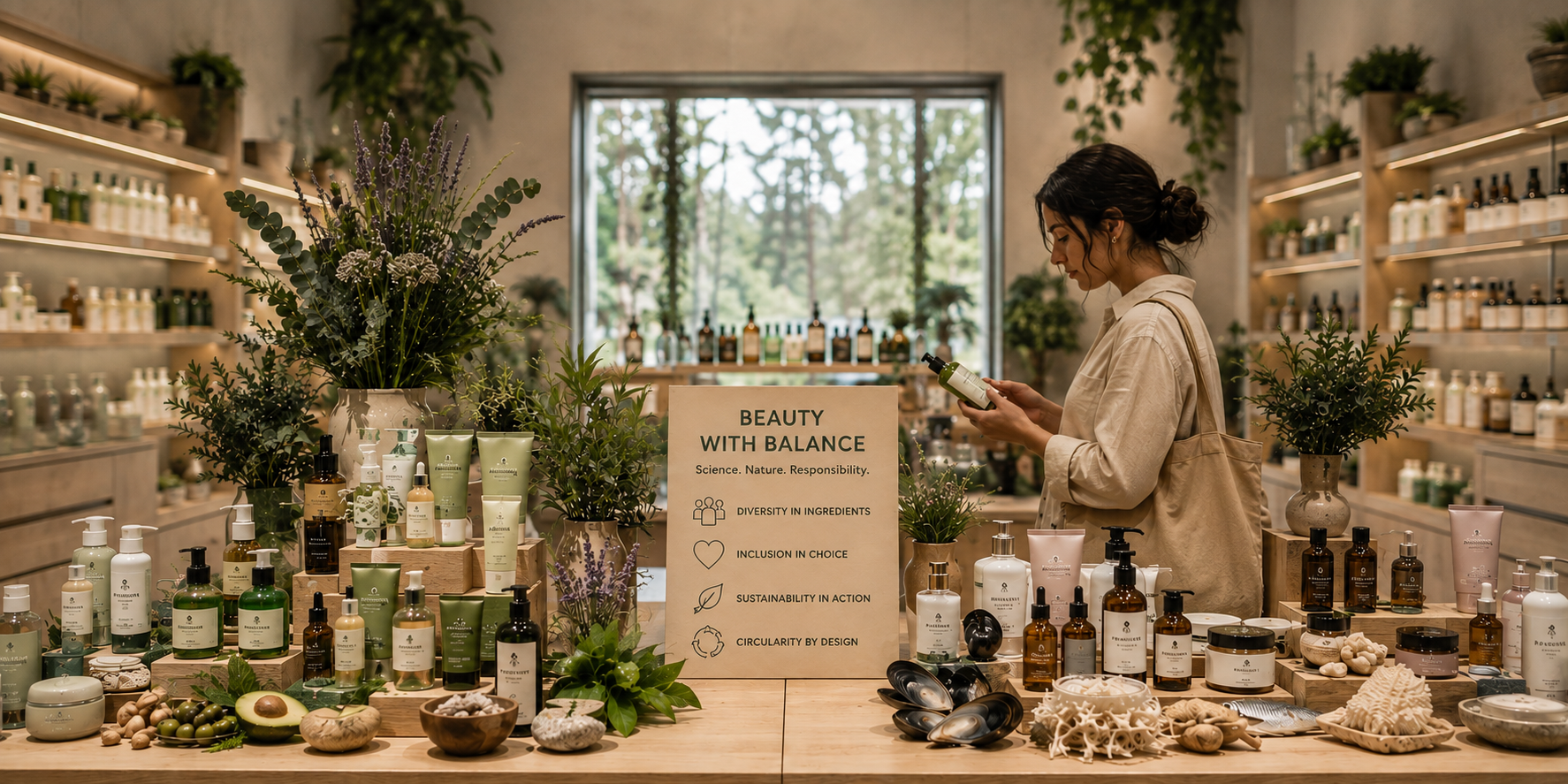
For cosmetic manufacturers, diversification of ingredient supply may therefore become increasingly valuable. Ingredients recovered from existing biological processing streams offer one potential component of that diversification.
The opportunity is not to recreate the cosmetics industry of the past. It is to apply modern science, safety standards and life-cycle thinking to resources that previous generations routinely valued rather than discarded.
After thousands of years in which humans used materials of animal, plant and mineral origin side by side, the next stage of sustainable cosmetics may similarly depend not on excluding an entire class of biological materials, but on using all available resources more intelligently, responsibly and completely.
References
[1] Cordain, L. et al. (2000). Plant-animal subsistence ratios and macronutrient energy estimations in worldwide hunter-gatherer diets. American Journal of Clinical Nutrition, 71, 682-692.
https://doi.org/10.1093/ajcn/71.3.682
[2] Kuipers, R.S. et al. (2010). Estimated macronutrient and fatty acid intakes from an East African Paleolithic diet. British Journal of Nutrition.
Supports the broad range of animal-food contributions proposed for Palaeolithic diets.
[3] Alt, K.W. et al. (2022). Nutrition and Health in Human Evolution—Past to Present. Nutrients, 14.
https://www.ncbi.nlm.nih.gov/pmc/articles/PMC9460423/
Reviews evolutionary diet evidence and the substantial contribution of animal foods among many hunter-gatherer societies.
[4] Rifkin, R.F. et al. (2015). Evaluating the Photoprotective Effects of Ochre on Human Skin by In Vivo SPF Assessment: Implications for Human Evolution, Adaptation and Dispersal. PLOS ONE, 10.
https://www.ncbi.nlm.nih.gov/pmc/articles/PMC4564224/
Provides experimental evidence concerning prehistoric ochre-based skin preparations and tests animal fat as a potential carrier.
[5] McMullen, R.L. & Dell'Acqua, G. (2023). History of Natural Ingredients in Cosmetics. Cosmetics, 10, 71.
https://doi.org/10.3390/cosmetics10030071
A particularly useful source for the paper because it reviews plant-, mineral- and animal-derived cosmetic ingredients from antiquity through modern cosmetic chemistry.
[6] Riesmeier, M. et al. (2022). Recipes of Ancient Egyptian kohls more diverse than previously thought. Scientific Reports.
https://www.ncbi.nlm.nih.gov/pmc/articles/PMC8994005/
Chemical analysis of ancient Egyptian cosmetic materials, including evidence consistent with animal fats described in historical formulations.
[7] Cerone, M. & Smith, T.K. (2021). A Brief Journey into the History of and Future Sources and Uses of Fatty Acids. Frontiers in Nutrition.
https://www.ncbi.nlm.nih.gov/pmc/articles/PMC8329090/
Useful for documenting the longstanding use of animal, fish and plant fats as sources of industrial lipids.
[8] Pingali, P.L. (2012). Green Revolution: Impacts, limits, and the path ahead. Proceedings of the National Academy of Sciences, 109, 12302-12308.
https://doi.org/10.1073/pnas.0912953109
Authoritative review of the productivity gains and environmental consequences of the Green Revolution.
[9] Tilman, D. (1999). Global environmental impacts of agricultural expansion: The need for sustainable and efficient practices. Proceedings of the National Academy of Sciences, 96, 5995-6000.
https://www.ncbi.nlm.nih.gov/pmc/articles/PMC34218/
Links fertiliser and pesticide use, agricultural intensification and global environmental pressures.
[10] Pirow, R. et al. (2019). Mineral oil in food, cosmetic products, and in products regulated by other legislations. Critical Reviews in Toxicology.
https://doi.org/10.1080/10408444.2019.1694862
Useful counterbalance demonstrating that petroleum-derived cosmetic materials should not automatically be characterised as unsafe.
[11] Sánchez-Bayo, F. & Wyckhuys, K.A.G. (2019). Worldwide decline of the entomofauna: A review of its drivers. Biological Conservation, 232, 8-27.
https://doi.org/10.1016/j.biocon.2019.01.020
Reviews reported insect declines and potential drivers, including intensive agriculture and pesticides.
[12] Wagner, D.L. (2020). Insect Declines in the Anthropocene. Annual Review of Entomology, 65, 457-480.
https://doi.org/10.1146/annurev-ento-011019-025151
A more cautious and authoritative review of the evidence for insect decline globally.
[13] Wagner, D.L. et al. (2021). Insect decline in the Anthropocene: Death by a thousand cuts. Proceedings of the National Academy of Sciences, 118.
https://doi.org/10.1073/pnas.2023989118
Reviews the interacting drivers of insect loss rather than attributing decline to one factor alone.
[14] Rigal, S. et al. (2023). Farmland practices are driving bird population decline across Europe. Proceedings of the National Academy of Sciences, 120.
https://doi.org/10.1073/pnas.2216573120
Central source for the European bird argument. It analyses 170 species across more than 20,000 monitoring sites and identifies agricultural intensification as the strongest pressure examined.
[15] Diaz, R.J. & Rosenberg, R. (2008). Spreading Dead Zones and Consequences for Marine Ecosystems. Science, 321, 926-929.
https://doi.org/10.1126/science.1156401
Seminal global analysis of coastal hypoxia and fertiliser-driven eutrophication.
[16] Breitburg, D. et al. (2018). Declining oxygen in the global ocean and coastal waters. Science, 359.
https://doi.org/10.1126/science.aam7240
Provides a broader assessment of deoxygenation in marine and coastal environments.
[17] Dai, M. et al. (2023). Persistent eutrophication and hypoxia in the coastal ocean. Cambridge Prisms: Coastal Futures.
Documents relationships between eutrophication, hypoxia, harmful algal blooms, biodiversity decline, seagrass loss and fish mortality.
[18] Pal, P. et al. (2024). Circular Bioeconomy in Action: Transforming Food Wastes into Renewable Resources.
https://www.ncbi.nlm.nih.gov/pmc/articles/PMC11431570/
Supports the wider principle that unavoidable food-system residues can be converted into higher-value renewable materials.
[19] Ferraro, V. et al. (2016). The “sisters” α-helices of collagen, elastin and keratin recovered from animal by-products. Trends in Food Science & Technology.
Documents the recovery and functionality of valuable structural proteins from animal processing co-products.
[20] Krzyżostan, M. et al. (2024). Use of Waste from the Food Industry and Applications of the Extracted Bioactive Compounds in the Cosmetic Industry. Sustainability, 16, 2757.
https://doi.org/10.3390/su16072757
Directly supports the argument for recovering food-industry residues as cosmetic raw materials.
[21] Fortune Business Insights (2026). Vegan Cosmetics Market Size, Share & Industry Analysis.
Market rather than peer-reviewed literature. It reports Europe as the largest regional vegan cosmetics market in 2025. It should therefore be used for commercial context rather than scientific claims.
[22] Koch, F. et al. Recent European dietary surveys reviewed in Self-Reported Adherence to Vegetarian and Vegan Diets.
https://www.ncbi.nlm.nih.gov/pmc/articles/PMC12621161/
Provides evidence that reported vegan dietary adherence remains in the low single digits in European populations studied.
[23] European Commission (2023). Transition Pathway for the Chemical Industry.
Describes the intended movement of European chemical production away from primary fossil-based feedstocks towards biomass, waste, recycled carbon and captured CO₂.
[24] International Energy Agency. Net Zero by 2050: A Roadmap for the Global Energy Sector.
https://www.iea.org/reports/net-zero-by-2050
The IEA's net-zero scenario projects substantial reductions in oil demand by 2050. This should be presented explicitly as a scenario rather than a guaranteed prediction.